Cooler Garage Space = Lower Energy Bills
The Most Cost-Effective DIY Insulation On The Market
Phone Today: (07) 3274 1194
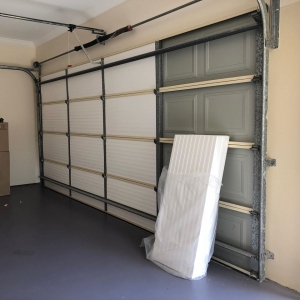
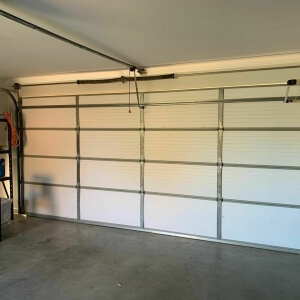
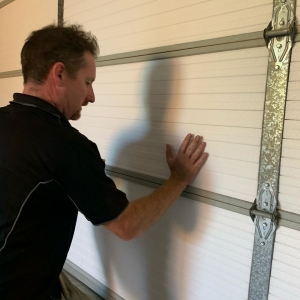
Cool your garage space with our quick, easy & cost-effective solution
“Your Garage Space Will Be Cooler, Your Connecting House Space – Cooler, Your Energy Bills – Smaller!” – Said by our in house specialists

Garage Door, Shed, Patio, and Underfloor insulation is designed and made locally by Queensland Polystyrene Specialists and is very different from any other insulation product on the market. Although due to its unique, simple, and revolutionary Patented Concertina cut to size panels, they will easily flex into the sections of your garage door, shed roof, wall purlins, and underfloor joists, batons and sit above the rafters (Australian Patent No. 2012101977).
This not only makes the insulation product quick and easy to install, it also ensures a firm snug fit for the best-continued insulation performance over the life of your home or shed.
Cooler Garage Space = Smaller Energy Bills!
Our Easy DIY Process
Step 1: Watch the Video
Step 2: Measure Your Door
Step 3: Click Shop Now
Step 4: Place sizes in your purchase comments

Frequently Asked Questions
What exactly is Expanded Polystyrene
It is a lightweight cellular material consisting of fine spherical shaped particles that are comprised of 98% air and 2% polystyrene. This air is trapped within several closed hollow cells in each particle.
How effective is EPS as a thermal insulation material?
EPS is an extremely effective essential because stabilized air is such a good insulator.
The thermal performance of a material is measured in terms of its resistance to the flow of heat. This thermal resistance is expressed in R-values, the higher the number, the better the insulation.
The R-value of the most commonly used Class (Class SL) is 1.13 for every 50mm thickness. This, 44mm of this Class of EPS delivers an R-value of 1.0
Is EPS cost effective compared to alternative insulation?
Because of the high level of versatility of EPS and the wide range of applications for which it is suitable, its cost effective compared to alternative materials can generally be accurately assessed only on a case by case basis.
In many applications however, particularly where an element of structural strength is required, EPS is the most cost-effective insulation material available.
EPS is the only insulation material that in practical, economic and efficiency terms can be applied to all areas of building constructions – ceilings, roofs, walls, floors and thermal insulation. That’s why EPS is the ultimate insulation.
Does EPS absorb water?
EPS particle are closed cell and cannot absorb water. During the process of molding a block, tiny channels are formed between the EPS particles. If the material is immersed in water these tiny channels can be filled with water. After immersion for more content by volume which has entered the channels.
Even under such an adverse and rare condition of prolonged saturation, EPS suffers little adverse effect. It maintains its shape, size, structure, cohesion and physical appearance. The ability of EPS to resist the adverse effects of moisture is exemplified by its widespread use in floats, marinas and other applications, which involve full or partial submergence in water for prolonged periods of time.
EPS is said to breathe. What does this mean?
The breathability characteristic of EPS refers to its ability to allow any absorbed moisture to escape when condition change. It therefore reduces any tendency towards the formation of vapor dams.
In applications where high humidity and temperature differentials are likely, a water vapor barrier such as plastic sheeting should be used. The vapor barrier is best installed on the warm side of the structural component, with the warm side of the structural component, with the insulation as near as possible to the cold side.
Does age effect the thermal performance of EPS?
No, EPS consists of 98% air and 2% polystyrene, and nothing else. Because of its cellular structure of EPS is dimensionally stable and will not settle over time. EPS used and installed correctly does not deteriorate with age and as such is able to deliver constant R-values for the life of the building.
Is EPS strong?
Yes. EPS is manufactured in several classes (or densities), and each class exhibits excellent compressive and flexural strength and dimensional stability characteristics at a very high strength to weight ratio.
The range of classes available enables specifiers to select the most appropriate balance between structural and insulation properties for any building application.
How effective is EPS as an acoustic insulation material?
Because EPS has predominantly closed cell structure, it offers only a limited absorption of airborne sounds.
Is EPS degraded by ultraviolet light?
Prolonged exposure to sunlight will cause a slight discoloration (yellowing) of PES insulation and cause some surface embrittlement.
Even so, the thermal insulation properties will not be affected unless exposure results in loss of thickness of the EPS boards, although the friable surface can make bonding difficult. For this reason, EPS insulation should be covered to protect it from UV light if it is to be stored in the open for extended periods.
Is EPS durable?
Yes, because EPS is an inert, organic material, it will not rot and is highly resistance to mildew. It also provides no nutritional value to ants, termites and rodents.
To prevent damage to EPS by pests and insects seeking to gain access to the other materials in buildings which provide a food source, EPS may be coated with a thin cement slurry.
Provided EPS does not suffer mechanical damage or failure of any fittings that may be used, it should have a life equal to that of the building in which it is installed.
Does EPS contain CFC’s?
No, EPS is chlorofluorocarbon (CFC) and hydro chlorofluorocarbon (HCFC) free.
At no stage during the manufacture or application of EPS is the use of CFC’s or HCFCs, or other compounds which are said to contribute to the other destruction of the earth’s ozone layer, required.
Does EPS burn?
Because EPS insulation boards contain a fire-retardant additive, they do not present an undue fire hazard when correctly installed.
Like timber, particle board and other organic building materials, EPS will burn when in contact with a flame. Due to the presence of the fire retardant additive in EPS, this flame will self-extinguish almost immediately after the fire source is removed.
Does EPS give off toxic fumes?
The level of toxicity of EPS in a fire situation is no greater than that of timber and other commonly used building materials; the same toxic gas, carbon monoxide is produced. Also produced are carbon dioxide and soot (carbon). There is no emission of such gases as hydrogen cyanide or hydrogen chlorine.
Where can EPS be used in building construction?
In almost any application where insulation or a combination of insulation and strength are required.
As an insulation material, it is used in a number of roof, wall, ceiling, and sub floor systems… often in combination with other materials such as steel (in sandwich panels commonly used for cold store construction), concrete (as an insulation core in tilt up wall panels) and gypsum and plasterboard (as skins for ceiling panels and other prefabricated components).
Is EPS subject to Australian standards?
Yes. Manufacturers when stating the class of EPS and therefore its physical characteristics are required to manufacture to AS 1366, 3, 1992. As such, he properties of EPS required for a application are guaranteed. Where the densities exceed the AS1366 – 3 – 1992 grade levels Queensland Polystyrene Specialists has measured the properties and provides specification sheets for these high-density grades.

At the beginning of 2020 Queensland Polystyrene Specialists (QPS) had been approved by AUSowned.
AUSowned has been established to help support Australian Owned Business by verifying that they are Australian Owned Companies.
The star rating on QPS’s badge displays what level of Australian Owned Company that they are. Therefore, three stars mean that QPS are 100% Australian owned, and their production and services are conducted in Australia.
Furthermore, it also means that QPS has no sneaky tricks and have the correct tax paid in Australia, and none of their profits are sent overseas.
For more information about AUSowned check out www.AusOwned.com.au